Types of Eyes: A Practical Guide to Eye Shapes and Features
Identify almond, round, hooded, monolid, deep-set, prominent, upturned, downturned, close-set, and wide-set eye features.
Common types of eyes include almond, round, monolid, hooded, upturned, downturned, deep-set, and prominent. Close-set and wide-set describe spacing rather than shape. These are descriptive labels, not rigid biological categories, and several can apply at once. You might have hooded almond eyes that are slightly upturned, for example.
The most useful way to identify your eyes is to examine six features separately: opening shape, eyelid crease, socket depth, corner tilt, prominence, and spacing. This gives you a clearer description than trying to choose one label from a list.
What “type of eyes” can describe
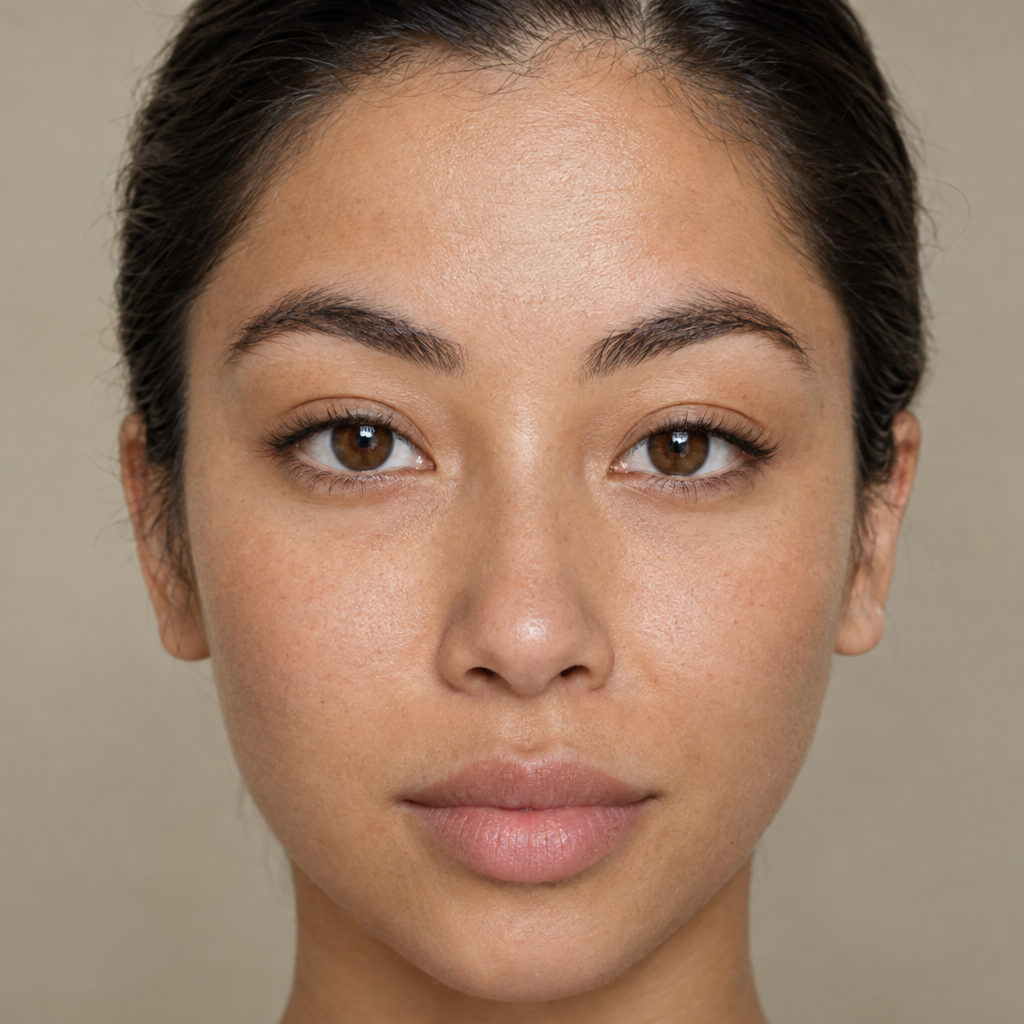
“Eye type” can refer to visible shape, eyelid structure, color, or internal anatomy. This guide focuses on the visible features you can observe in a mirror or reference photo.
The opening between the eyelids has an anatomical name: the palpebral fissure. Words such as almond and round are informal descriptions of that opening, not precise anatomical classifications.
Other labels answer different questions:
- Opening shape: Does the outline look elongated or relatively round?
- Eyelid crease: Is an upper-lid crease visible, absent, or partly covered?
- Socket depth: How recessed does the eye appear beneath the brow bone?
- Corner tilt: Is the outer corner higher than, level with, or lower than the inner corner?
- Prominence: How far forward does the eye appear relative to its surrounding socket?
- Spacing: How does the gap between the eyes compare with their width?
These dimensions can produce combined descriptions. Depth and prominence are related aspects of eye position, but neither tells you the shape of the opening or whether the lid is hooded.
No eye type is a default or ideal. These labels do not determine personality, ethnicity, gender, or attractiveness.
Eye types at a glance
Use this table to find the feature a label describes. Compare terms within the same dimension first.
| Dimension | Description | Main visual cue |
|---|---|---|
| Opening shape | Almond | Elongated opening; lids closely frame the iris |
| Opening shape | Round | Taller opening; more white may show |
| Eyelid crease | Visible crease | Upper-lid fold remains visible |
| Eyelid crease | Monolid | Little or no visible crease |
| Eyelid crease | Hooded | Skin overlaps the crease or mobile lid |
| Socket depth | Deep-set | Eye appears recessed beneath the brow bone |
| Corner tilt | Upturned | Outer corner higher than inner |
| Corner tilt | Level | Corners appear at similar heights |
| Corner tilt | Downturned | Outer corner lower than inner |
| Prominence | Prominent | Eye appears more forward within the socket |
| Prominence | Less prominent | Less forward projection is visible |
| Spacing | Close-set | Gap narrower than one eye-width |
| Spacing | Roughly one-eye-width | Gap approximately matches one eye-width |
| Spacing | Wide-set | Gap wider than one eye-width |
The spacing comparisons are rough styling conventions, not clinical standards or targets for how eyes should look.
Almond eyes versus round eyes
Almond eyes usually have a horizontally elongated opening that narrows toward the corners. The upper and lower lids tend to meet or closely frame the top and bottom of the iris, which is the colored part of the eye.
Round eyes have a relatively taller, more open-looking outline. More sclera, the white of the eye, may be visible below or sometimes above the iris.
When comparing front-facing examples, look for the difference between an elongated opening whose lid edges closely frame the iris and a rounder opening with some visible sclera above or below it. Neither cue is definitive by itself. Gaze direction, expression, and natural lid position can alter how much white is visible.
A simple iris-and-lid check
Look straight ahead with your eyebrows relaxed and your eyes naturally open. Do not widen them deliberately.
- Notice whether the iris appears to meet both the upper and lower lids.
- Look for white consistently visible above or below the iris.
- Consider the whole outline: is it more elongated or more circular?
If the lids closely frame the iris and the opening is elongated, almond may be a useful description. If the opening looks taller and white remains visible around the iris vertically, round may fit better.
These are visual clues, not strict rules. A little white below the iris does not automatically make an eye round. Gaze direction, lid position, and expression all affect what is visible.
Check the actual eyelid edges rather than the outline created by eyeliner or lashes. A long wing can make an opening look more elongated, while lashes concentrated above the center can emphasize roundness.
Monolid, hooded, and deep-set eyes are different features
These terms are often grouped together, but they describe different parts of the eye area.
Monolid versus hooded: crease structure or fold coverage?
A monolid has little or no visible upper-eyelid crease. It does not mean the eyelid has no folds or contours anywhere.
With hooded eyes, skin folds over part of the upper-lid crease or the mobile lid, which is the portion that moves over the eye when you blink. Hooding may be more noticeable at the outer corner or extend across much of the lid.
The useful distinction is:
- Monolid: A distinct upper-lid crease is not visible or clearly defined.
- Hooded: An overlying fold covers some of the crease or mobile lid.
A hidden crease can be difficult to distinguish from an absent visible crease in a single photograph. Looking gently downward may reveal a crease that is covered when looking straight ahead. Avoid pulling the skin or raising your brows to force a particular appearance.
An epicanthic fold is a fold of skin near the inner eye corner. It can occur with monolids or other eyelid structures and is not the same thing as hooding. It should not be used to infer someone’s ethnicity or ancestry.
Hooded versus deep-set: lid coverage or eye position?
Deep-set eyes appear positioned farther beneath the brow bone. The surrounding brow and socket can create natural shadows even when the upper-lid crease is visible.
Compare two questions:
- Does skin overlap the crease or mobile lid? That points toward hooding.
- Does the eye appear recessed relative to the brow bone? That points toward depth.
A front view helps you examine lid-fold coverage. A slight side view makes the relationship between the eye and brow bone easier to assess. Paired front and side observations are useful because a fold that is obvious from the front does not necessarily indicate greater socket depth, while a recessed eye may be clearer from the side without extensive crease coverage.
Strong overhead lighting can exaggerate depth, so do not classify eyes from shadow alone. For a more focused comparison, see hooded eyes versus deep-set eyes.
Someone can have both hooded and deep-set eyes. One describes fold coverage; the other describes position.
For makeup, the distinction is practical. With hooding, check liner and shadow placement while looking straight ahead so you can see what remains visible. With deep-set eyes, consider where natural shadows already fall before adding dark shadow throughout the socket.
Upturned, downturned, prominent, close-set, and wide-set eyes
These descriptions add information about tilt, projection, and spacing rather than replacing an opening-shape label.
Upturned versus downturned: compare the corners
With your head level, imagine a horizontal line passing through the inner corner of each eye.
- Upturned: The outer corner appears higher than the inner corner.
- Downturned: The outer corner appears lower than the inner corner.
- Level: The corners appear at approximately the same height.
The relationship between the inner and outer corners is often discussed as canthal tilt. For a casual description, you do not need to calculate an angle.
Look at the corners where the lids meet, not the tips of your eyelashes or eyeliner. A small head tilt can change the apparent relationship, and subtle differences may reasonably remain unclassified.
Round versus prominent: outline or forward projection?
Round describes the outline of the opening and how the lids frame the iris. Prominent describes how far forward the eye appears relative to its surrounding socket.
They are not interchangeable:
- Almond eyes can be prominent.
- Round eyes can be deep-set.
- A round opening does not necessarily mean greater forward projection.
A slight side view may help you understand projection, but a casual photograph cannot measure it reliably. Close-up camera perspective and directional light can change the impression.
Close-set versus wide-set: compare the gap with one eye-width
For a rough spacing check:
- Estimate the horizontal width of one eye, from inner to outer corner.
- Compare that width with the gap between the two inner corners.
- Use close-set if the gap looks smaller, wide-set if it looks larger, or roughly one-eye-width apart if they look similar.
This is a styling convention, not a clinical measurement. A gap of approximately one eye-width is sometimes called proportionate spacing, but that wording does not make it more attractive or desirable.
If your eyes differ slightly in width, use both as a rough reference rather than selecting whichever produces a particular label.
A six-step eye shape self-check
A neutral mirror view or photo is enough for a useful description. The goal is to see your usual features clearly, not to produce an exact measurement.
- Look straight ahead and relax your expression. Let your eyebrows rest naturally. Avoid squinting, widening your eyes, or smiling strongly while making the initial comparison.
- Keep your head level. Do not tilt your chin up or down or lean toward one shoulder. This matters especially when comparing corner heights.
- Use soft, even front lighting. Face a window with indirect daylight or use diffuse light in front of you. Strong overhead or side lighting can exaggerate brow-bone shadows.
- Keep the eyelids visible. Move hair away from the eye area. If practical, assess without dramatic liner, false lashes, or heavy shadow that obscures the crease.
- Position the camera near eye level. Avoid very close wide-angle selfies. Move farther back and crop the image if needed rather than bringing the lens close to your face. Use an unfiltered photo.
- Review the six dimensions separately. Note opening shape, crease, depth, tilt, prominence, and spacing. Add a slight side view for depth and projection, while keeping the straight-on view for tilt and spacing.
Your photo is a reference, not an objective measurement. Lens perspective, lighting, expression, image quality, and makeup can all influence the result.
If you would like another reference after making your own observations, Facefy’s Eye Shape Detector offers a photo-based estimate. Treat its AI-generated assessment as a descriptive aid rather than a definitive classification.
Your description can include several eye features
A combined description is often more useful than a single label because each word answers a different question.
- Hooded almond eyes with a slight upturn: Hooded describes lid coverage, almond describes the opening, and upturned describes corner position.
- Round, deep-set eyes with level corners: Round describes the opening, deep-set describes socket position, and level describes tilt.
- Monolid almond eyes that are wide-set: Monolid describes the crease, almond describes the opening, and wide-set describes spacing.
- Prominent almond eyes with slightly downturned corners: Prominent describes forward projection, almond describes the opening, and downturned describes tilt.
You do not need a descriptor for every dimension. “Slightly hooded with level corners” may be enough for choosing makeup placement or explaining what you notice.
If your eyes fall between almond and round, “an elongated opening with some lower white visible” can be more informative than forcing either label.
Why your eyes may look different from one view to another
Expression, head position, camera distance, and lighting can change visible lid space, corner alignment, and natural socket shadows. Makeup and lashes can also reshape the perceived outline. Winged liner may emphasize length, while lashes concentrated above the center can make the opening appear rounder.
If you are comparing makeup effects, take one neutral reference photo first and keep your head position, expression, camera distance, and lighting consistent between versions. This makes it easier to see what the makeup changes without mistaking those changes for a different underlying eye type.
Small differences between the two eyes are also part of natural facial symmetry. If you’re curious about these visible differences, Facefy’s Symmetry Checker offers a photo-based way to explore facial balance. Its results are appearance estimates influenced by lighting, camera angle, and expression, not medical assessments.
If your features do not fit neatly
- Your two eyes may differ: Small differences in opening, crease visibility, or tilt are common. Describe each separately if useful.
- A crease may appear inconsistently: Expression, gaze, and gradual age-related changes can alter how much of it you see.
- Mixed traits are expected: Hooding does not rule out an almond opening or a deep-set position.
- Borderline labels are reasonable: “Slightly upturned,” “partly hooded,” or “between almond and round” are useful descriptions, not incomplete answers.
There is no need to keep taking photos until one label seems certain. Use the description that helps with your practical goal and leave subtle distinctions open.
When a change is more than an eye type
Eye-shape labels describe appearance. They cannot diagnose a health condition.
Sudden eyelid drooping, new bulging, swelling, pain, double vision, vision loss, or another abrupt visual change should not be classified as a cosmetic eye type. Seek prompt medical assessment for new or sudden changes.
Sudden vision loss or severe eye pain warrants emergency care. Sudden drooping accompanied by weakness, a severe headache, or other neurological symptoms also needs emergency attention.
A stable feature you have had for years is different from a new symptom. If you are unsure, a qualified healthcare professional can assess the change.
Questions about eye shapes
Can you have more than one eye shape description?
Yes. The labels describe different dimensions, so several can apply together. “Hooded almond eyes with a slight upturn” describes lid coverage, opening shape, and corner tilt without contradiction.
Are monolids an eye shape or an eyelid type?
Monolid primarily describes the upper-eyelid crease rather than the shape of the opening. A person with monolids can also have elongated or rounder openings, different corner tilts, and different spacing.
Can one eye differ from the other?
Yes. Small differences in crease visibility, opening size, or corner position are common. You do not need to assign identical descriptions to both eyes. A sudden new difference, however, deserves medical attention rather than cosmetic classification.
Does eye shape change with age?
The visible eye area can change as the eyelids and surrounding tissues change. Hooding or crease visibility may become more noticeable, while other features remain broadly similar. Age does not necessarily change every dimension together.
Can makeup or eyelashes make eye shape look different?
Yes. Makeup and lashes change the perceived outline, not the underlying socket position. For example, outer-corner liner can emphasize length, while lashes concentrated above the center can emphasize a rounder appearance.
Are eye-shape labels scientific categories?
Not as one standardized system. Anatomical terms describe structures, while labels such as almond and round are informal visual descriptions. Their value is in helping you explain what you see, not in placing every pair of eyes into a fixed category.